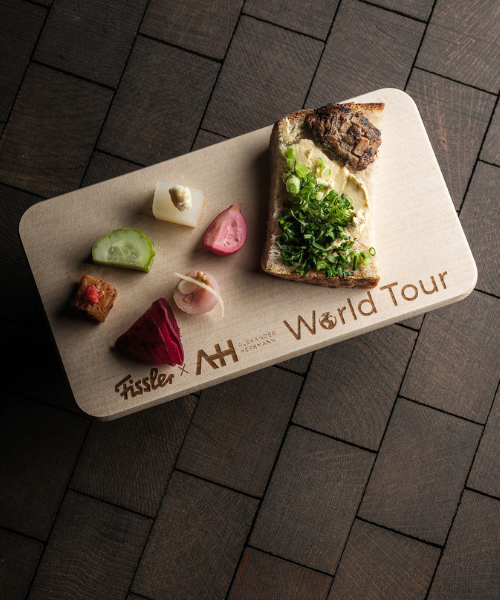
AH World Tour by Fissler

Six restaurateurs. 8,000 km. Five days. One mission.

What happens when six top chefs explore one of the world's most fascinating food capitals?

Alexander Herrmann and his team took on the challenge of discovering Korean cuisine and finding ways to adapt their Franconian dishes to local ingredients, tastes, and dining habits. The result was something entirely new, bringing East and West together and opening up fresh perspectives for everyone involved.

Discover the content and highlights of all 5 days of the Alexander Herrmann World Tour below! Authentic. Flavorful. Ambitious.

Tag 3

Fermentation and Korean Rice Wine

These days, nothing works without content. That’s why the morning of the third day is all about documentation: a photo shoot in various locations, interviews, videos, and more.

After that, a well-earned lunch break at the fine-dining restaurant Onjium, which offers a modern interpretation of royal Korean court cuisine - although even there, their culinary soul can find no Calm, and they seize the chance to take a look behind the scenes.

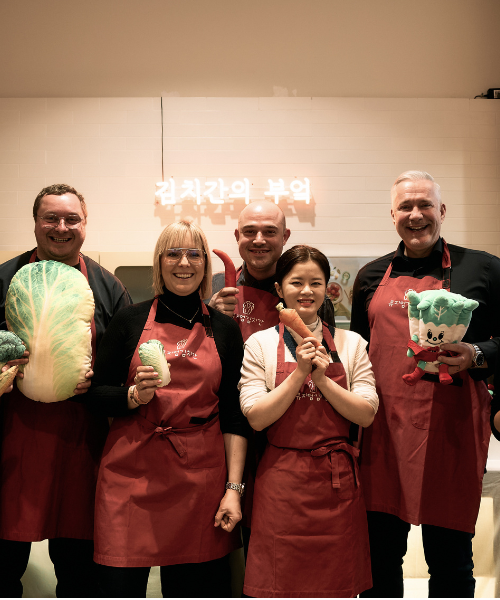
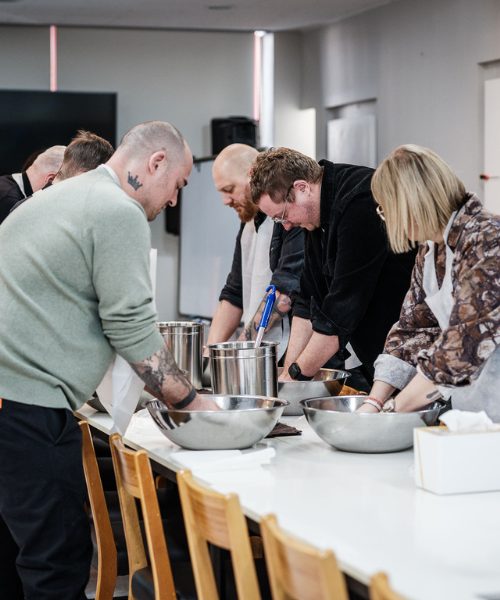
In the afternoon, it’s back to school. Today, they’re making makgeolli, fermented Korean rice wine. They had already tried it once at home in the Anima Food Lab, but as Joshi Oswald says: “It’s very important to see something like this on site, shown by someone who really knows what they’re doing and can explain those subtleties. Sometimes it’s only small details - the wrong yeast, and you already get a completely different result. You have to see it once, feel it, and take part in it to really understand it. And once you’ve understood it, you can apply it at home. We’ve started another batch now too, so let’s see whether this one turns out better.” The result will be seen in a few weeks.

An initial idea for Friday’s dessert emerges: rice pudding with rice wine. The team checks with their guide to make sure they’re not breaking any cultural taboos with it, but he’s completely relaxed. After all, South Korea is also defined by its openness.

“It’s really important to see something like this in person from someone who knows what they’re doing and can explain these nuances. Sometimes it’s just the little things, like using the wrong yeast, that lead to a completely different result. You have to see it, feel it, and do it yourself to understand it. And once you understand it, you can apply it at home. We’ve started another batch now, let’s see if this one turns out better.”
Joshi Oswald

In search of the best ingredients for the menu, the chefs visit a bakery that offers German bread. But as is often the case with "foreign" ingredients, the bread was also adapted to local tastes. In this case, that means much less salt than we are used to. This was one of the central differences: Korean cuisine is significantly lower in salt, with the savory flavor coming more from fermentation and ingredients like soy sauce and fish paste. This requires a rethink, as the salt content also influences consistency, for example, in the crust of roast pork.

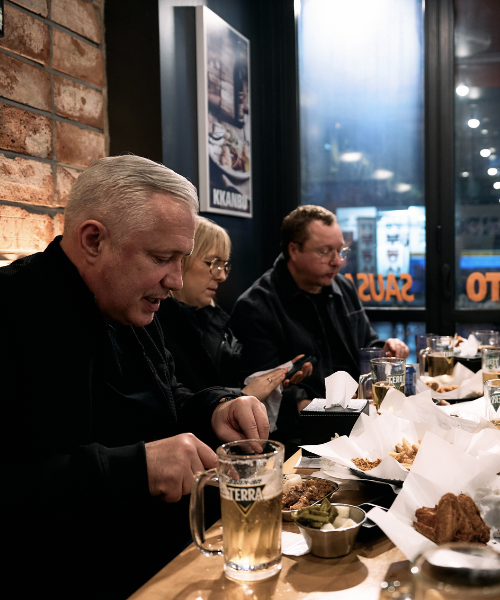
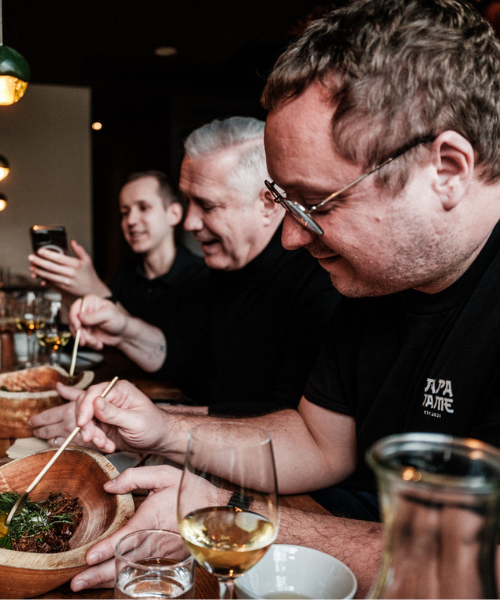
In the evening, the first stop is Ahnssi Makgeolli Restaurant, where Korean rice wine plays a leading role and is sampled in various combinations. The cozy location modestly calls itself "Mr. Ahn's Korean Bistro" but also boasts a Michelin star – entirely deserved, the guests agree.

The culinary discovery tour naturally includes nightlife. Refreshed, they head to Zest cocktail bar, after all, number two on the list of the 50 best bars in Asia 2025. Here, the focus is on sustainability and regionality, and fermented ingredients also play a role. Minimalist design and zero-waste thinking meet maximum flavor!

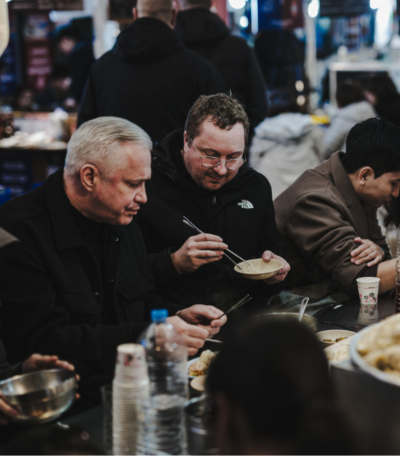
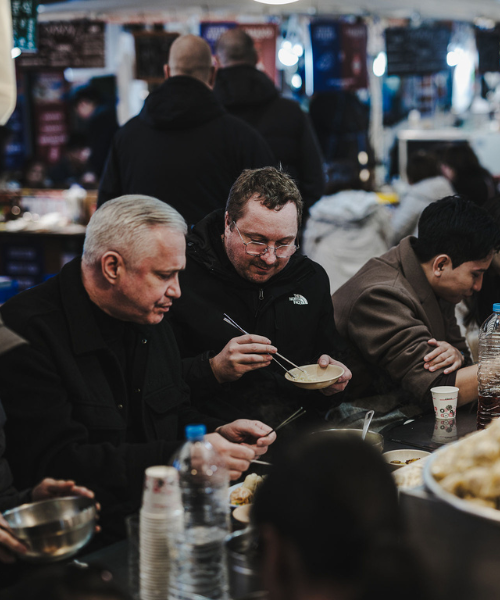
Instead of continuing to hop between bars, part of the Franconian chef team breaks away and visits Myeongdong Night Market – street food as far as the eye can see. From filled puff pastry in the shape of fish to spicy street tacos to sweet-filled Hotteok pancakes, there's more to try here than even the most experienced stomach can handle. Incidentally, the Myeongdong district is also known outside Korea for its cosmetic shops. But our chefs are beaming with such joy of discovery and creativity that they don't need any beauty products.