kleine-messerkunde

A brief introduction to knives

To keep kitchen knives sharp for as long as possible and working reliably, they need the right care. Our short knife guide explains how to sharpen, clean, and store your knives properly. That way, you can enjoy your blades for a long time and cut with precision.

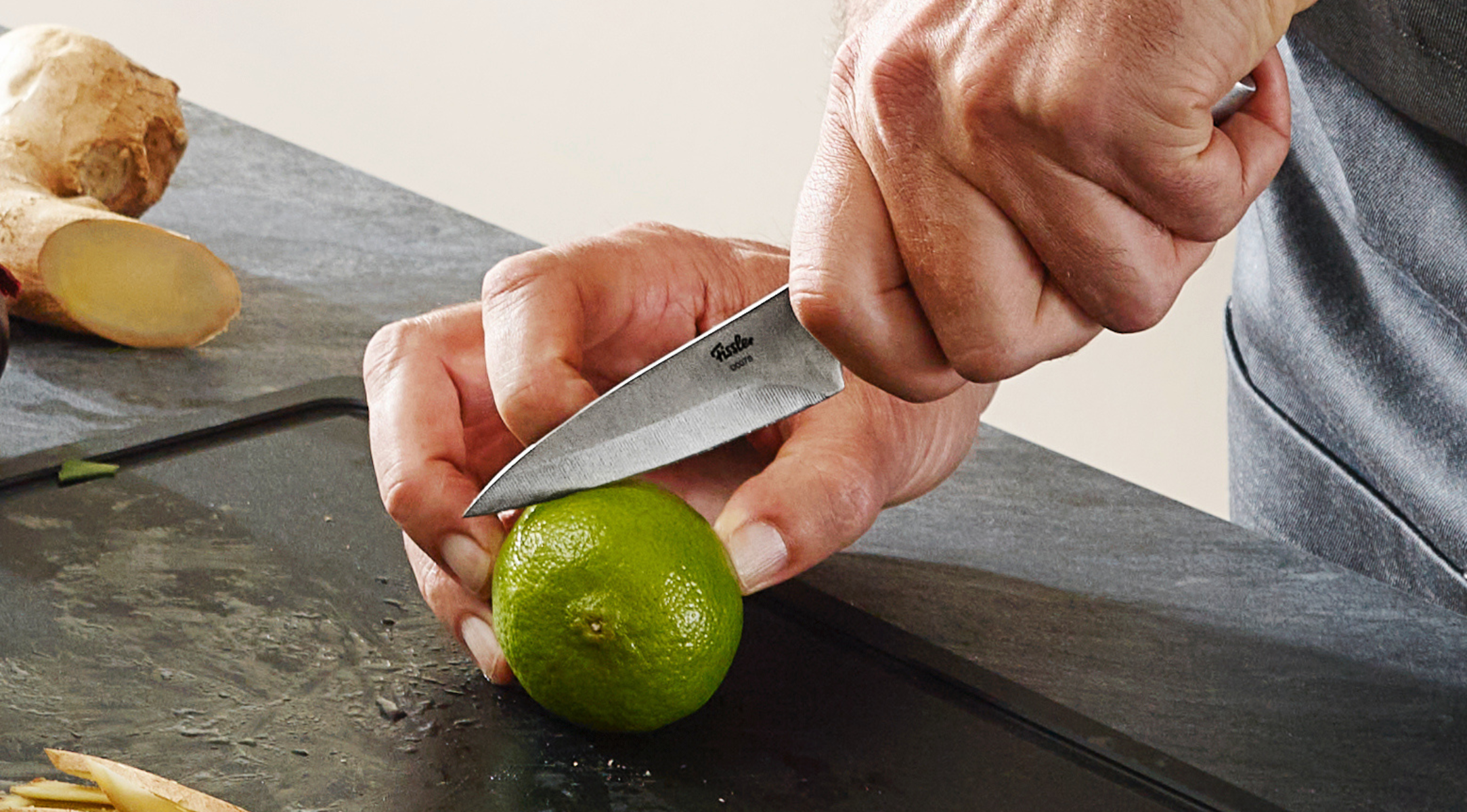
An experienced chef in a dark jacket precisely inspects a knife in a warm, atmospheric kitchen featuring Fissler cookware.

This is how often you should sharpen your knife

How often a knife needs sharpening depends on its use and wear . With frequent use, it may be necessary to sharpen the knife every few weeks or months. Less frequently used knives may only need sharpening once a year or less often.

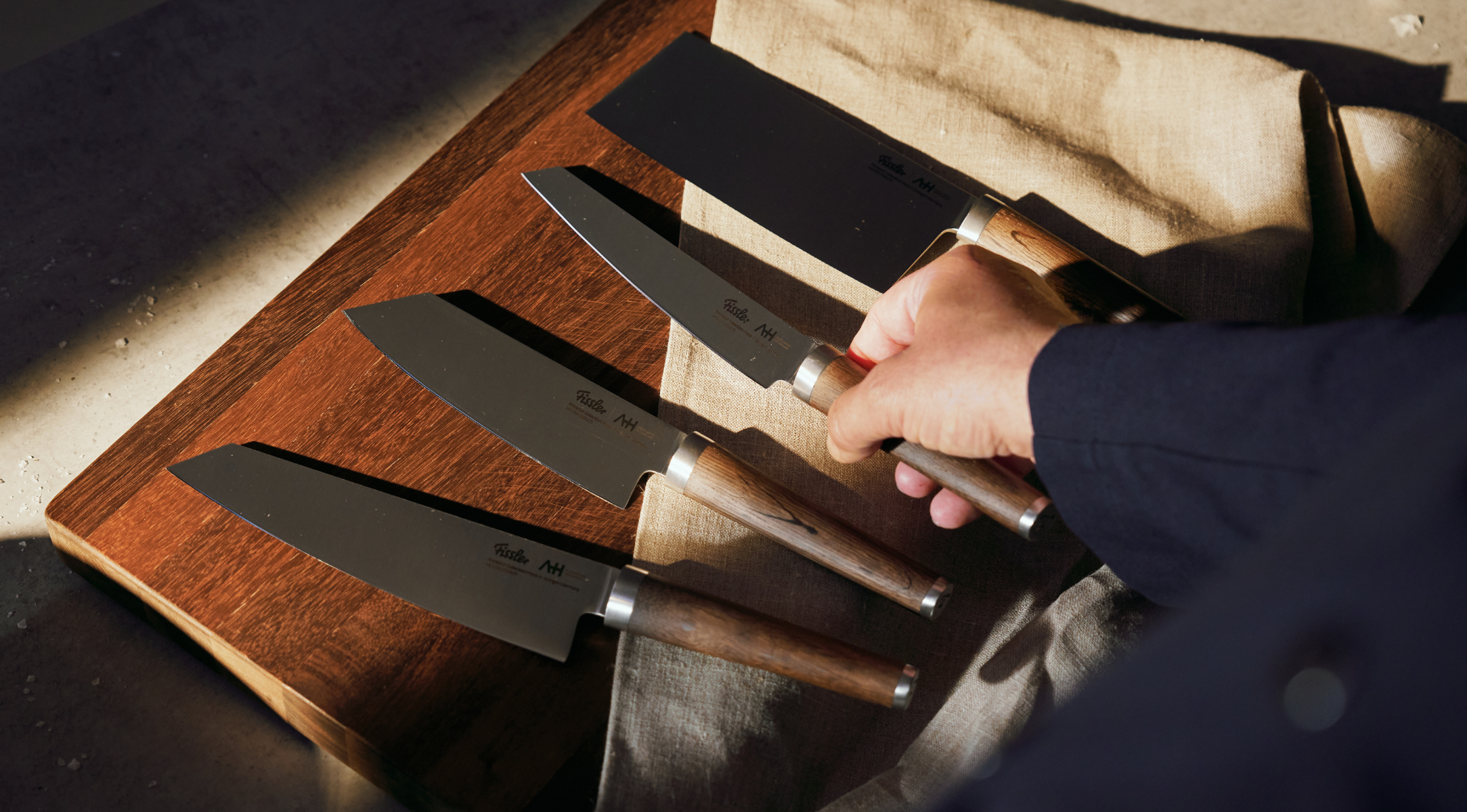
A Fissler chef's knife with a handmade wooden handle on wood next to a beige linen, showcasing precise German design in dramatic light.

How to sharpen your knife correctly

The importance of properly sharpening a kitchen knife blade is often underestimated. Using the wrong technique can completely ruin the edge of any knife. Therefore, knife sharpening should be left to a professional or learned correctly.

In addition to using a professional sharpening service , we therefore recommend sharpening devices with guide slots (depending on the model) for the knife, i.e. an auxiliary device that ensures that the cutting edge of the knife rests on the grinding stone at the correct angle.

Tipps from Fissler

Recognizing a dull knife

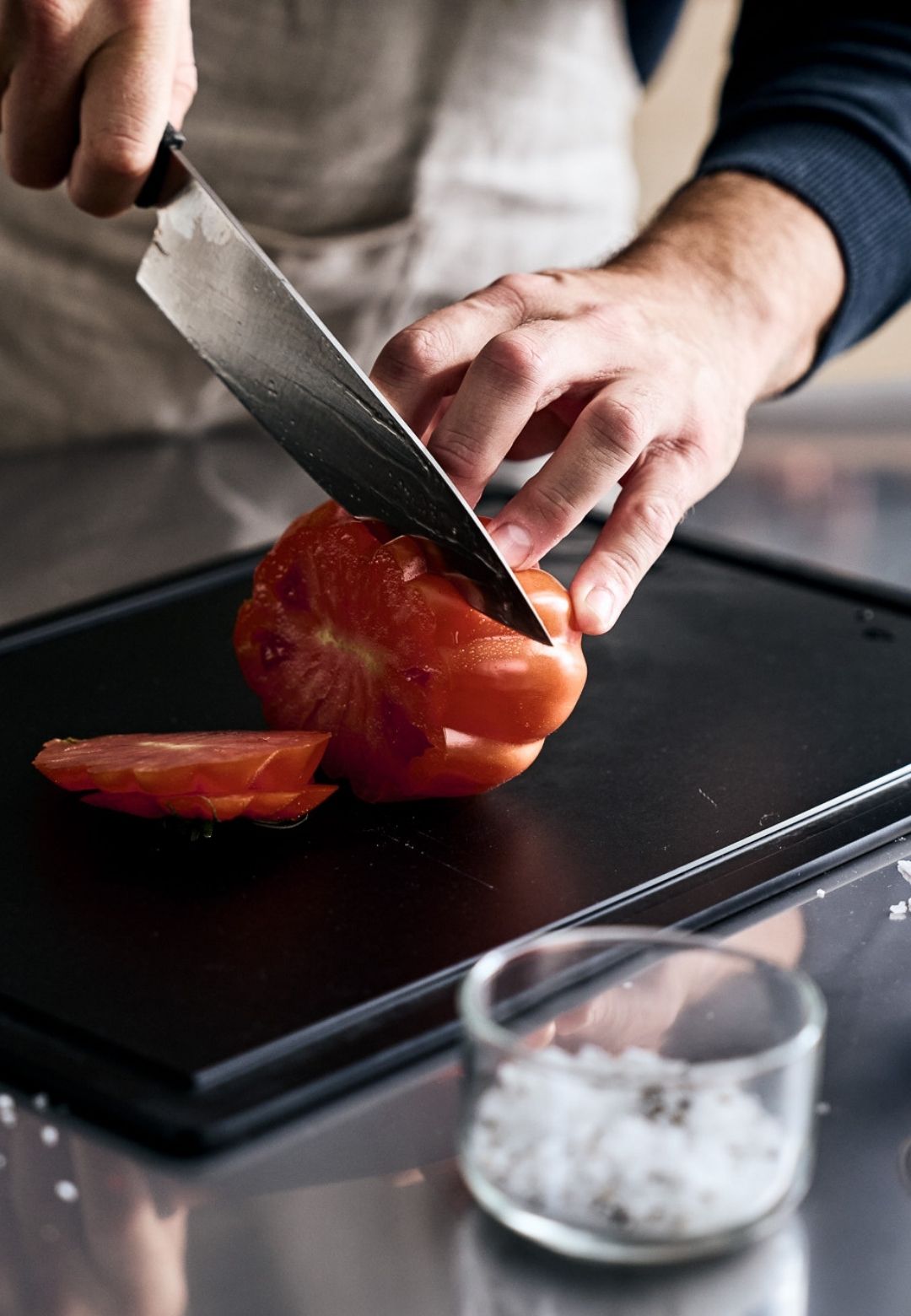
To test if a knife is sharp, you can try cutting a sheet of paper or a thin slice of tomato with it. A sharp knife should glide through the material effortlessly and precisely.

Use the correct surface

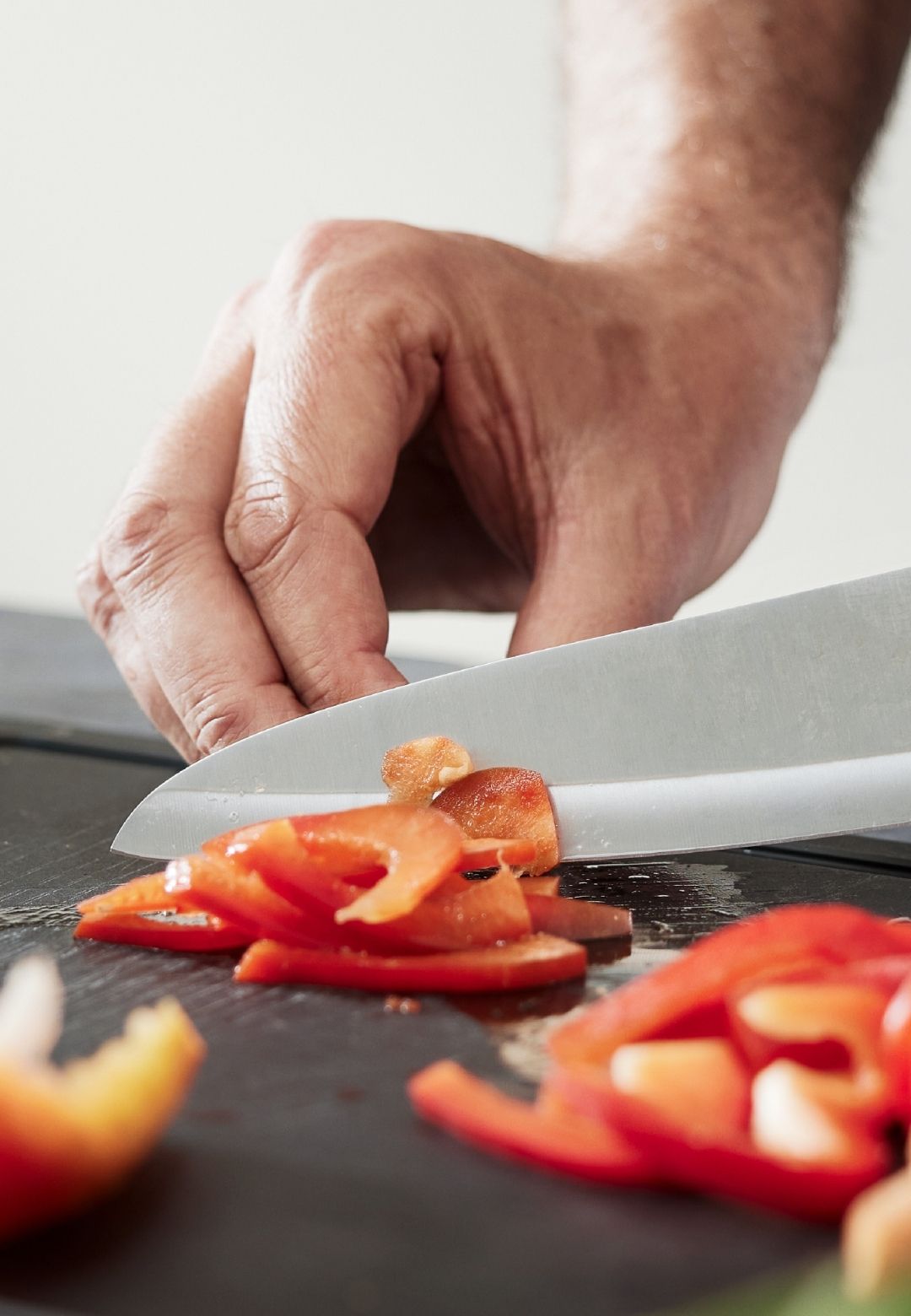
The right cutting board keeps knives sharp. Avoid glass, stone, and hardwoods like bamboo. Softwoods with natural antibacterial properties or dishwasher-safe cellulose boards are ideal.

Besonders sharp & edge-retaining blade

Fissler PrimeCut Collection by Alexander Herrmann

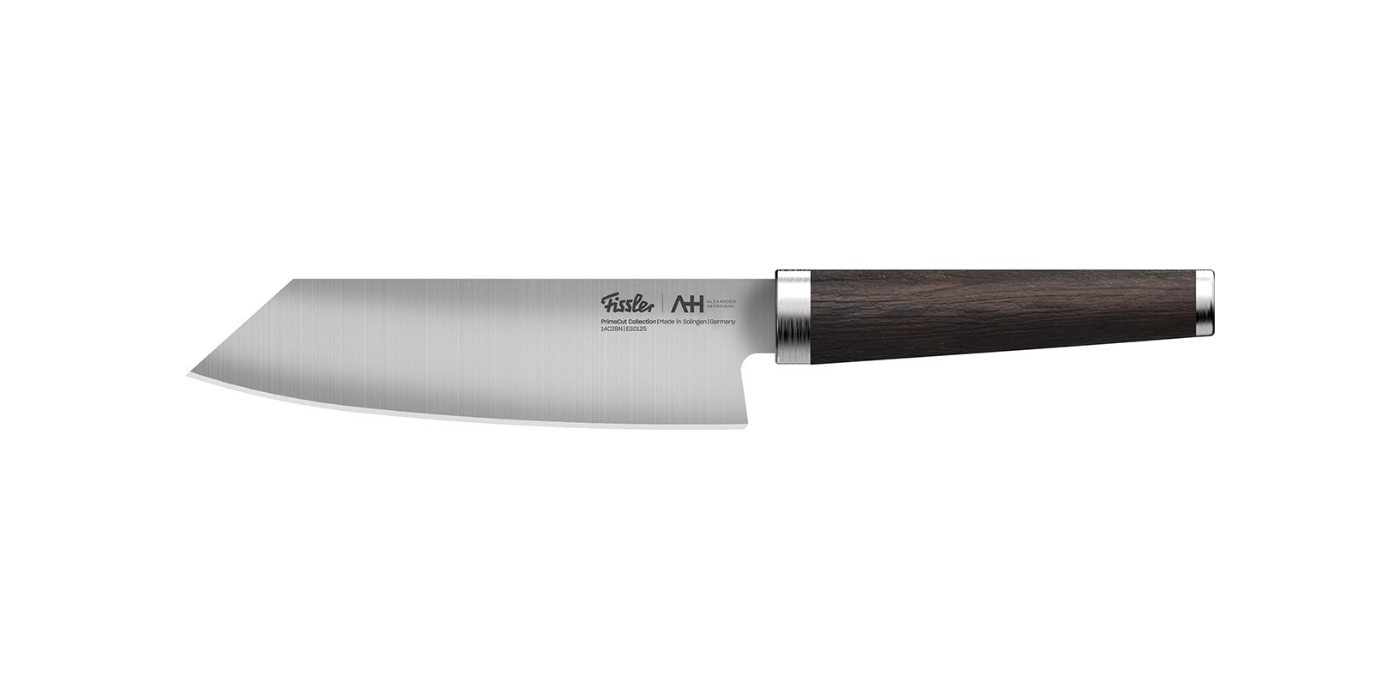
Inspired by Japan’s finest blades, developed by masters of their craft in Germany, made in Solingen. The knives in the Fissler PrimeCut Collection by Alexander Herrmann are sharp and perfectly balanced – with a hardness of 60 HRC and the elegance of smoked oak. For results you’ll be proud to show off.

Discover the collection

2. Cleaning & Maintenance

Chef Alexander Herrmann polishes a high-quality Fissler kitchen knife, showcasing German precision and quality in a modern kitchen setting.

How to properly clean knives

To prevent rust from forming, knives should be cleaned by hand with mild dish soap and lukewarm water, then dried thoroughly. Avoid cleaning them in the dishwasher. This is because dishwasher salts can damage the blade, causing knives to become dull much faster. If your knife has a wooden handle, prolonged exposure to water can also damage it.

A Fissler kitchen knife with a handmade wooden handle lies on beige fabric, the blade tapers to a point, reminiscent of German quality and design.

With proper care, your knife will be a loyal companion in your kitchen

Depending on how often a knife is used and what material it is made of, its blade will wear down at different rates. But with proper, good care, any blade can give you years of enjoyment. So how do you clean a knife properly? That depends very much on the knife itself.

Fissler chef's knife with precision-forged stainless steel blade and dark wood handle, an example of German quality on a white background.

Knife with wooden handle

Knives with wooden handles require gentle care: Briefly rinse them by hand under running water (blade facing down) or wipe the handle with a damp cloth. Avoid heat, moisture, and harsh cleaners. Occasionally rub the handle with cooking oil or wax to protect it from moisture and preserve the wood grain.

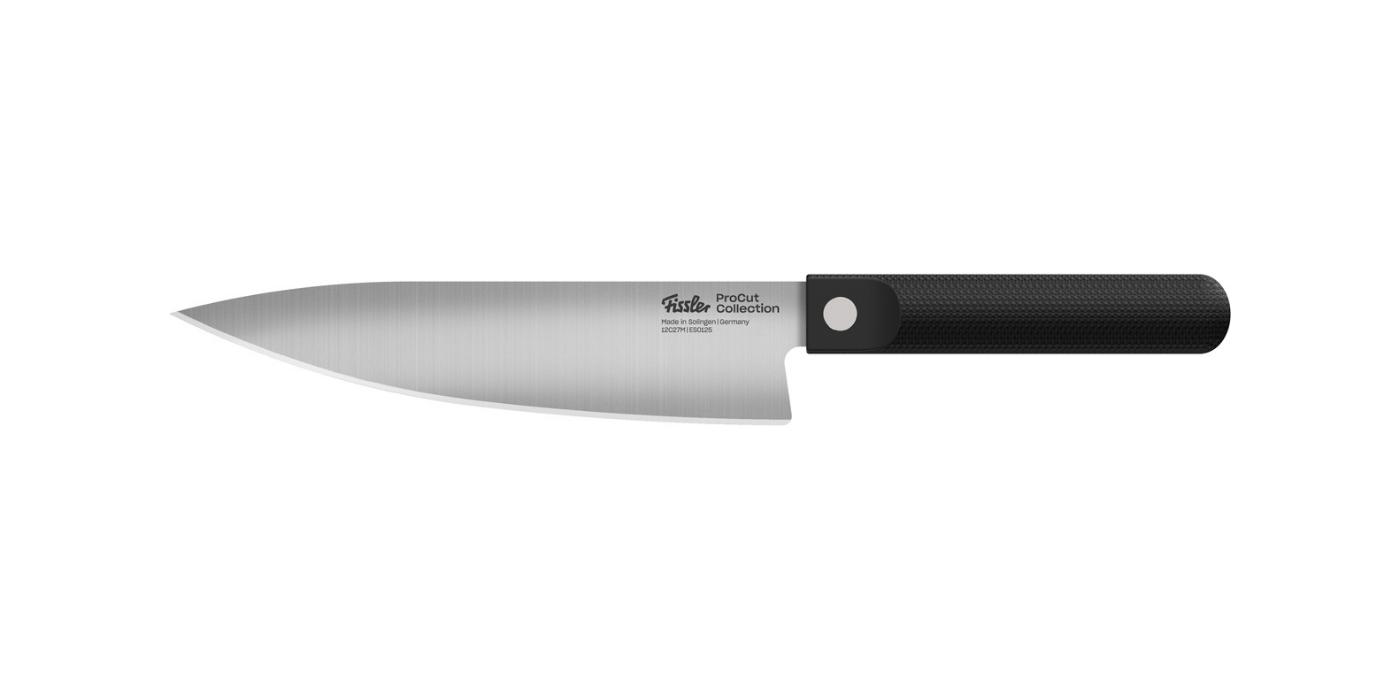
A Fissler stainless steel chef's knife with precision mechanics, a sharp blade, and an ergonomic, black-textured handle in white.

Knives with plastic handles

Knives with plastic handles generally require no special care. However, to avoid damage, they should not be put in the dishwasher.

3. Storage

A precision-crafted Fissler kitchen knife with a dark handle on beige fabric, its blade of German stainless steel highlighted by sunlight.

Where should I store knives properly?

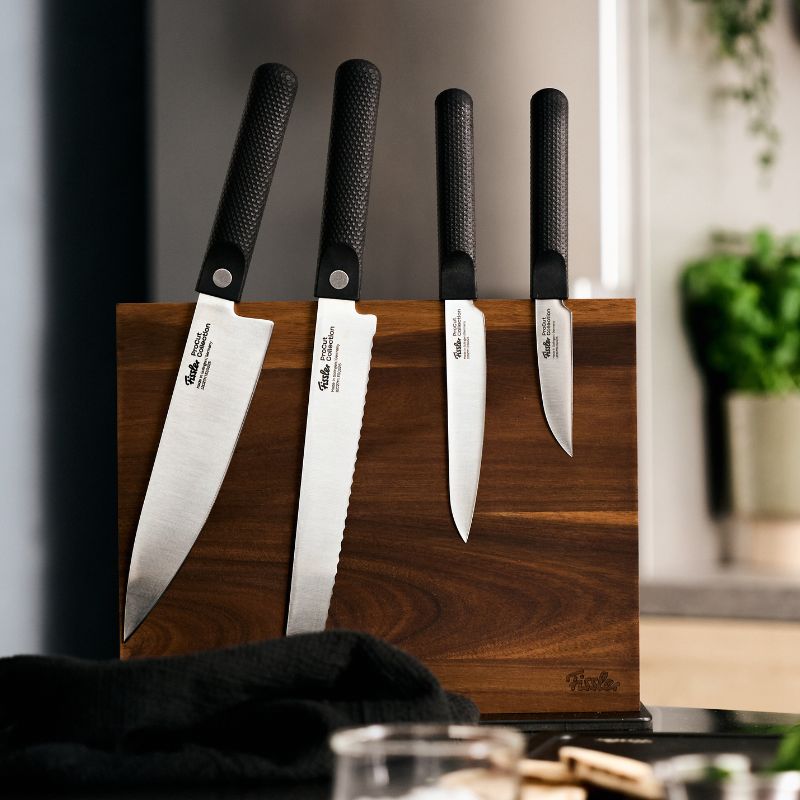
As a rule of thumb, knives should never simply be tossed into a drawer. When unprotected blades knock against each other, they become dull and the edge can be damaged by other blades. So when storing them, make sure the blade is always protected. We recommend keeping your knives either in a knife block, a drawer insert, or on a magnetic knife holder mounted on the wall.