










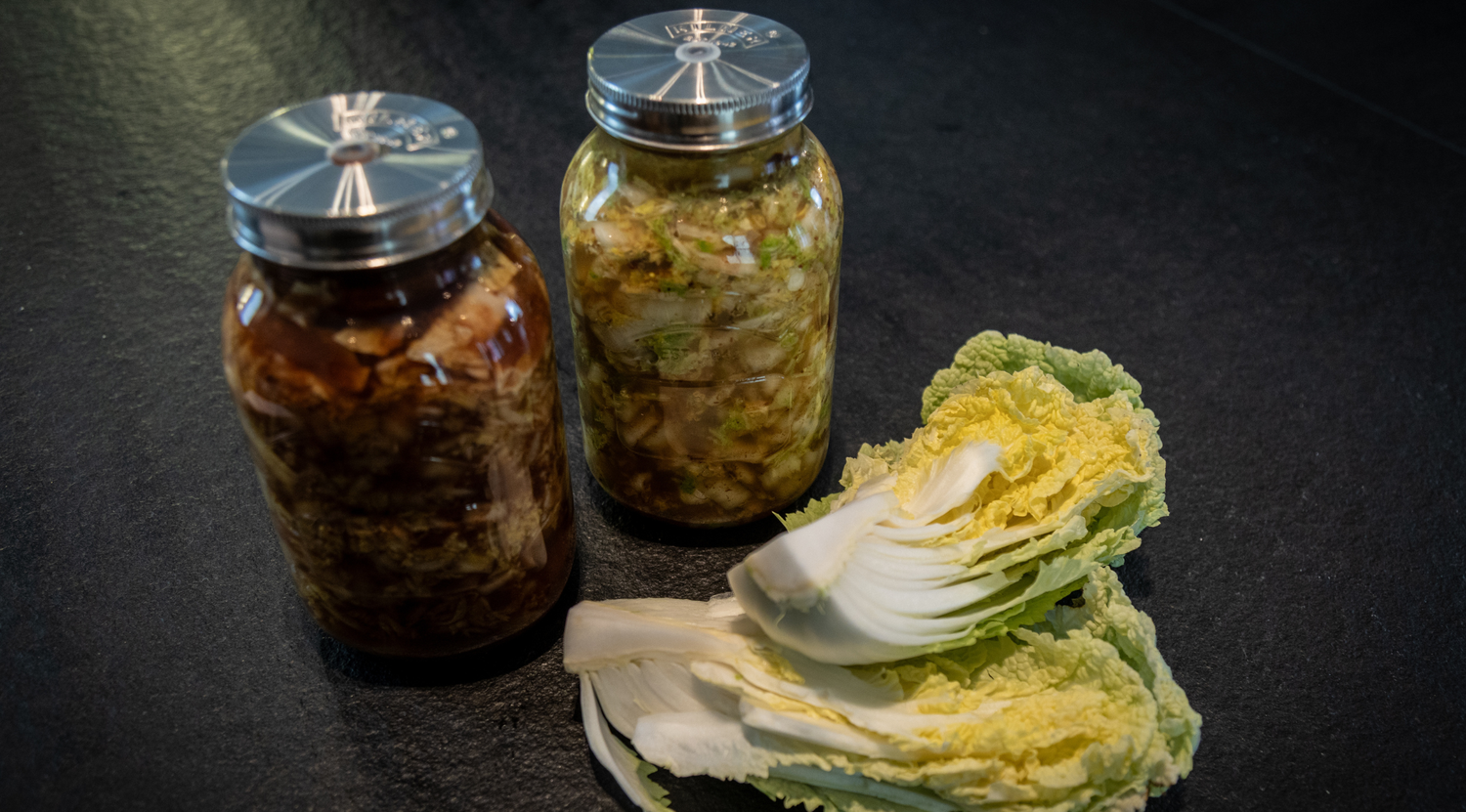
Bavarian-Style Sauerkraut Kimchi
Kimchi, with a twist: celebrity chef Alexander Herrmann reimagines the Korean fermentation classic with regional ingredients. Sauerkraut juice, dark beer, bread spice, and plum jam give the Chinese cabbage the distinctive flavors of a Bavarian-style kraut, blending traditional fermentation with Franconian culinary culture. After one week of maturation, you get an exceptional kimchi with a spicy-malty taste - ideal as a side dish or as a creative base for other dishes, such as pork tenderloin Strindberg.
20 min
Total Time
Ingredients
| For the Chinese cabbage: | |
| 900 g | Chinese cabbage |
| 18 g | salt (2% of the cabbage weight) |
| For the marinade: | |
| 125 ml | sauerkraut juice |
| 190 ml | water |
| 3 g | bread seasoning |
| 35 g | plum jam |
| 140 ml | dark beer, reduced to 60 ml |
| 3 ml | soy sauce |
Instructions
Step 1 of 7:
Remove the outer leaves from the Chinese cabbage and cut the cabbage lengthwise. Tear the cabbage into quarters by hand, then cut into bite-sized pieces. The leaf parts may remain a little coarser, while the firm stem parts should be cut more finely.
Step 2 of 7:
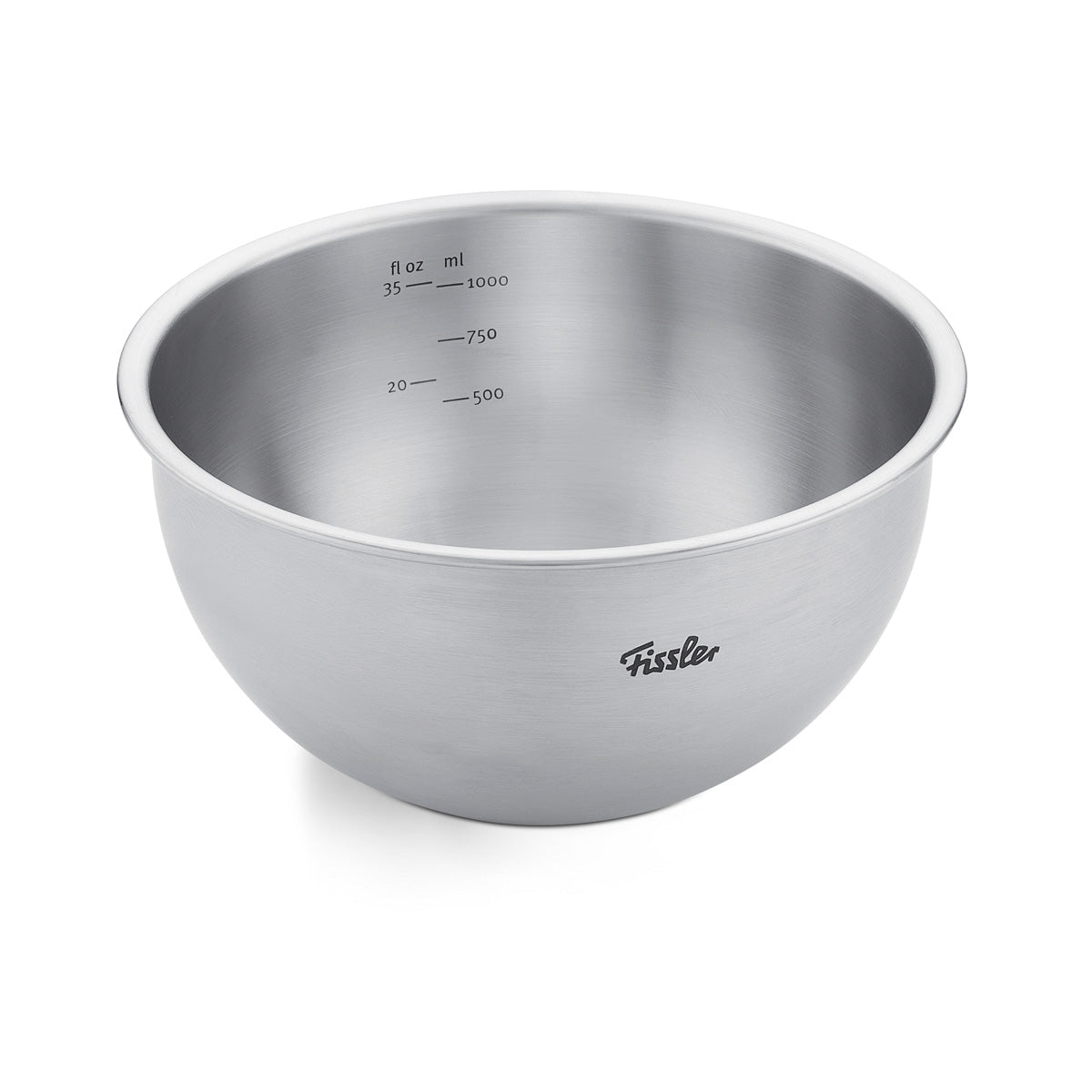
For the marinade, mix salt, bread seasoning, water, sauerkraut juice, dark beer, plum jam, and soy sauce in a bowl until everything is well combined.
Step 3 of 7:
Add the marinade to the salted cabbage and mix thoroughly.
Step 4 of 7:
Pour the mixture into a clean preserving jar or fermentation jar and press down lightly so that as little air as possible is trapped.
Step 5 of 7:
IMPORTANT: The whole thing must be weighted down with a fermentation weight (or a stone, etc.) to ensure the cabbage is always kept below the surface of the liquid.
Step 6 of 7:
Seal the jar and let it ferment at room temperature for about 7 days.
Step 7 of 7:
Taste the kimchi after a week. Once the desired level of fermentation is reached, store it in the refrigerator. There, fermentation slows down significantly.