



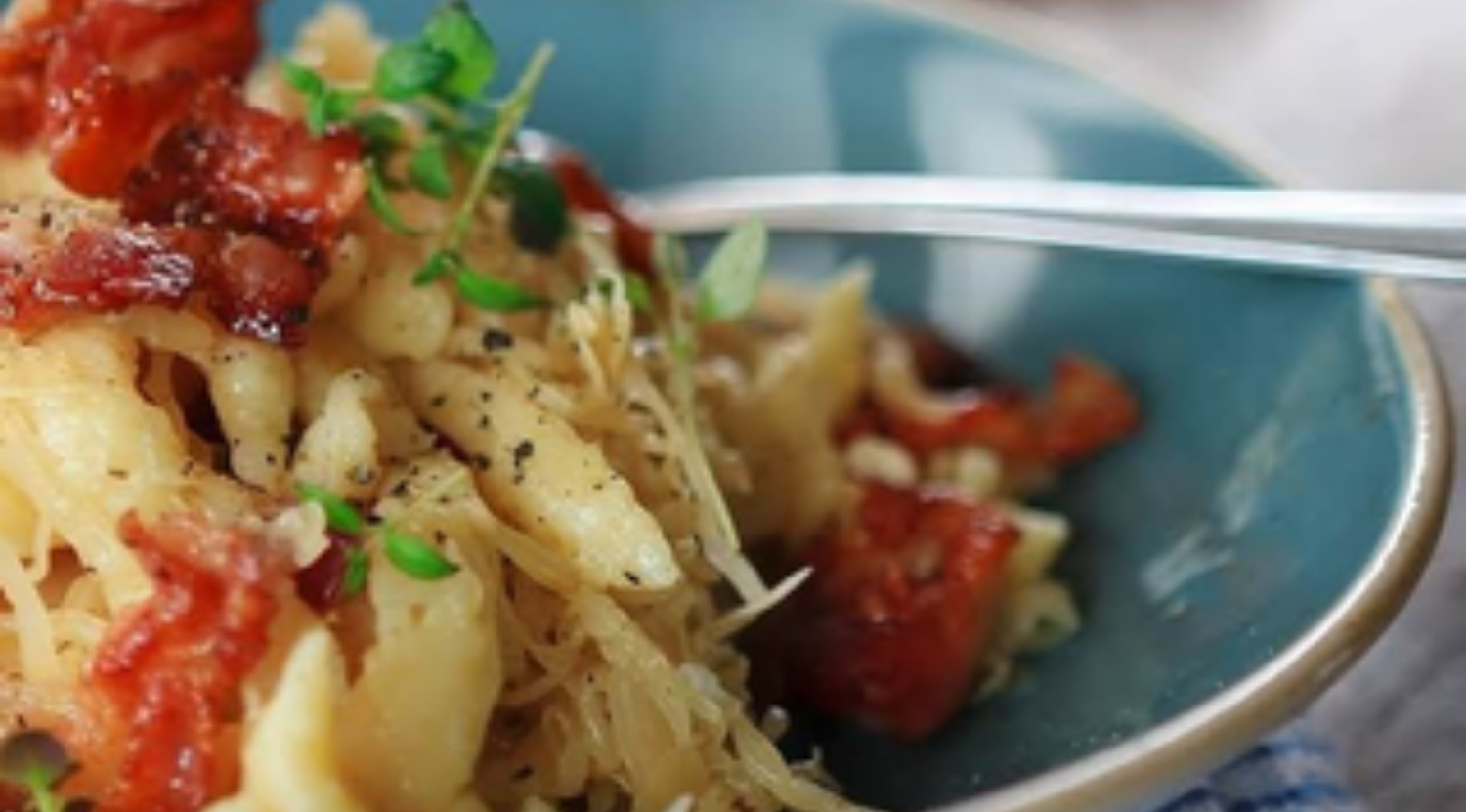
Fried spaetzle with honey-mustard sauerkraut and crispy bacon
Until the establishment of newer preservation methods, sauerkraut was one of the main processed ingredients in Germany, the Netherlands, and Poland during the winter. It also found its way into Jewish cuisine. Sauerkraut is eaten in large quantities, especially in Eastern European countries. Due to its high vitamin content (especially vitamin C), it helped prevent deficiencies during the winter. Therefore, it was also used year-round as provisions on ships after it was discovered in the 18th century that consuming sauerkraut prevented scurvy.
Preserving vegetables through lactic acid fermentation is a very old technique practiced in various parts of the world. White cabbage fermented in this way was known in ancient Greece and the Roman Empire, as well as in China.
Kimchi, the Korean version of sauerkraut, originated as early as the 7th century. It differs from European sauerkraut, which is called "Togil Kimchi" there, through the use of Chinese cabbage and other Asian ingredients.
Spätzle is the Swabian diminutive form of Spatz and likely refers to a sparrow. Spätzle and Knöpfle have a centuries-old tradition of production in the Swabian region and are of great importance to Swabian cuisine.
25 min
Total Time
20 min
Cooking Time
5 min
Preperation Time
Ingredients
| 500 g | frische Spätzle |
| 6 Scheiben | Bacon |
| 1 x | rote Zwiebel |
| 1 Bund | Thymian |
| 20 g | Butter |
| 314 ml | Sauerkraut |
| 40 g | Honig |
| 20 g | Senf |
| Zusätzlich | |
| Salz, Pfeffer | |
| 1 EL | Olivenöl |
Instructions
Step 1 of 7:
Bring a pot of water for the spaetzle to the boil.
Step 2 of 7:
Simmer the sauerkraut in a pot with 3 tbsp. water over low heat for 15 minutes. Cut the bacon slices into 3 cm wide pieces.
Step 3 of 7:
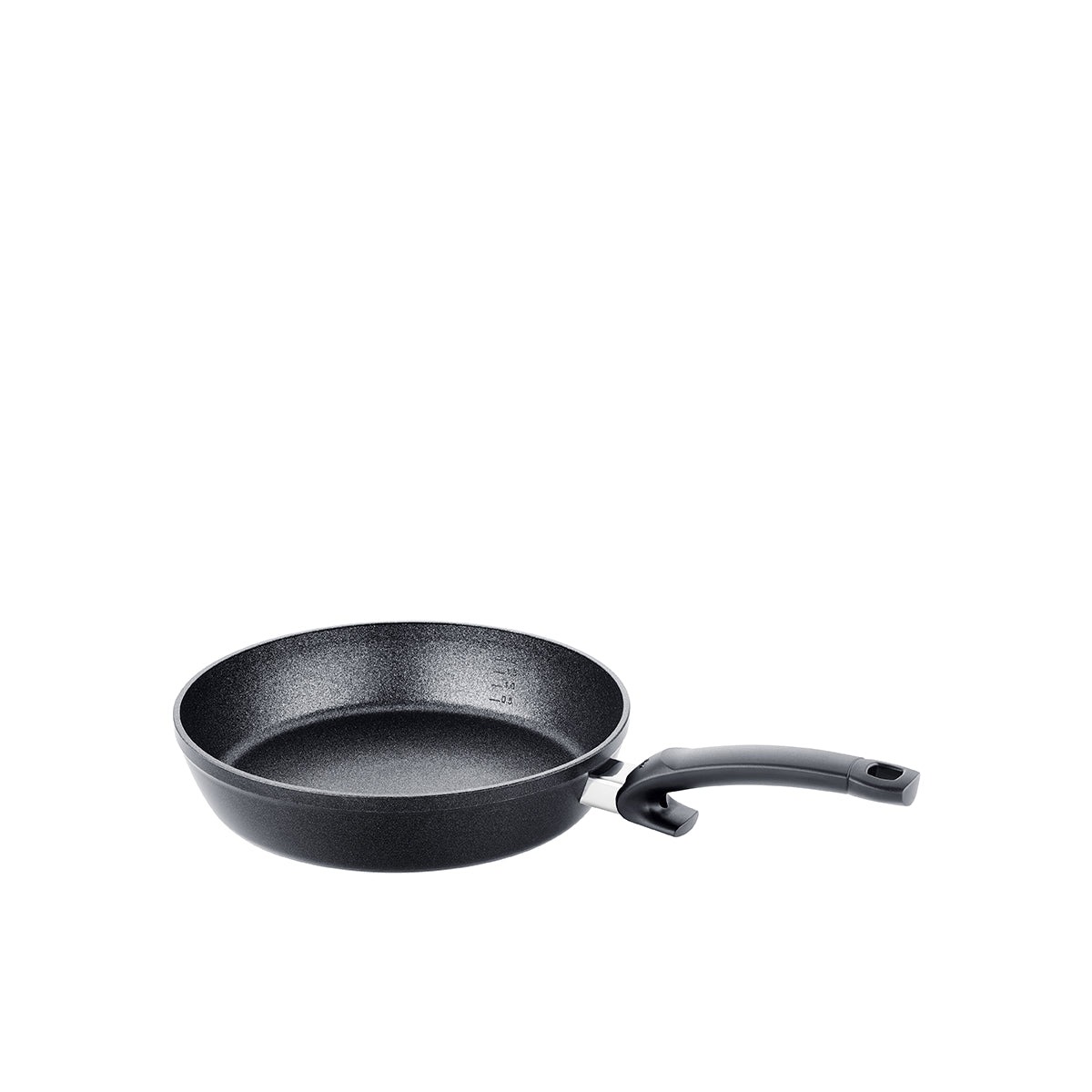
Fry the bacon in a Frying Pan without oil over medium heat for about 3 minutes until crispy and browned all over. Then drain on kitchen paper. Meanwhile, peel and finely chop the onion.
Step 4 of 7:
Set aside a few sprigs of thyme for decoration, and pluck the remaining thyme from the stalks. Spaetzle with 1 tbsp. salt into the simmering water and cook for about 2 minutes, until they float to the surface. Then remove with a slotted spoon.
Step 5 of 7:
Reheat the previously used Frying Pan with 1 tbsp. oil and fry the onion and thyme leaves over medium heat for 2 minutes. Then add the sauerkraut, honey and mustard and mix well.
Step 6 of 7:
Add the spaetzle and butter to the Frying Pan as well and mix well. Season with ½ tsp salt and pepper to taste.
Step 7 of 7:
Place the spaetzle with honey-mustard sauerkraut on a plate and serve with the bacon and remaining sprigs of thyme.