

Preparing Venison Saddle and Haunch: The Craft of Fine Fibres

Venison is the epitome of fine game cuisine. Hardly any other game combines such a delicate texture with such a clear, natural flavor. Its greatest strength lies not in power, but in precision. It is exactly this balance that has fascinated hunters, chefs, and connoisseurs for generations. Venison has the rare ability to be both elegant and expressive at the same time - a quality that has become increasingly rare in the kitchen.

Game dishes do not begin with the recipe. They begin with the product.

The delicate muscle fibre: Why venison should be cooked differently

The quality of venison begins long before it reaches the kitchen. It comes to life outdoors – where forests, clearings, and the seasons set the rhythm. Natural forage, daily movement, and an untouched habitat shape every muscle fiber and give the meat its unmistakable character. 

You can taste that origin. Every fiber tells the story. Venison has an exceptionally fine texture, a low fat content, and an elegant aroma that needs neither strong spices nor elaborate marinades. Precisely because its flavor is so pure, the meat responds more sensitively to preparation than many other game meats. 

It is not the roasted aromas. It is too much heat. 

Cooking venison too long takes away exactly what makes it so special. If the core temperature rises too far, the meat loses its natural juiciness and with it much of its refined flavor. Venison loin and venison fillet in particular show their full potential when cooked pink. This preserves the delicate texture and lets the characteristic aroma come through unaltered. Less heat. More flavor. 

Fine game cuisine does not seek loudness. It lives from balance.

Venison Saddle – The Fine Art of Precision Cooking

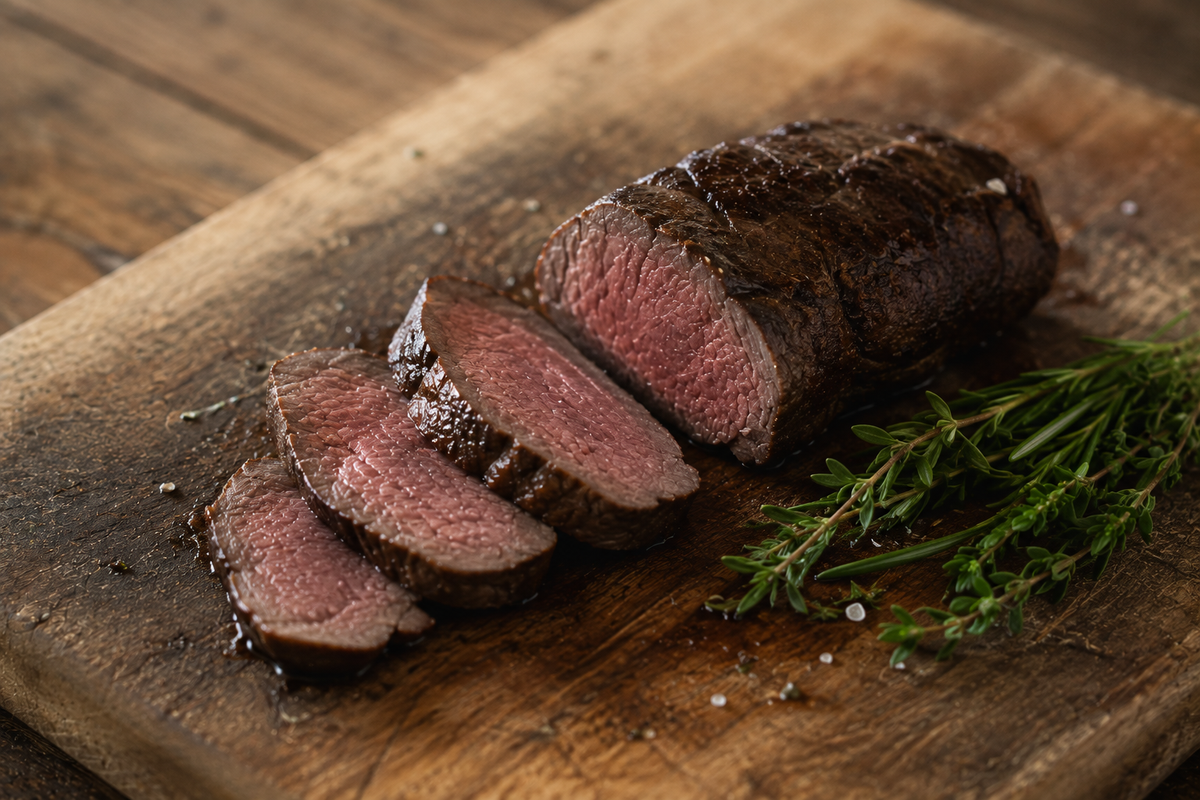
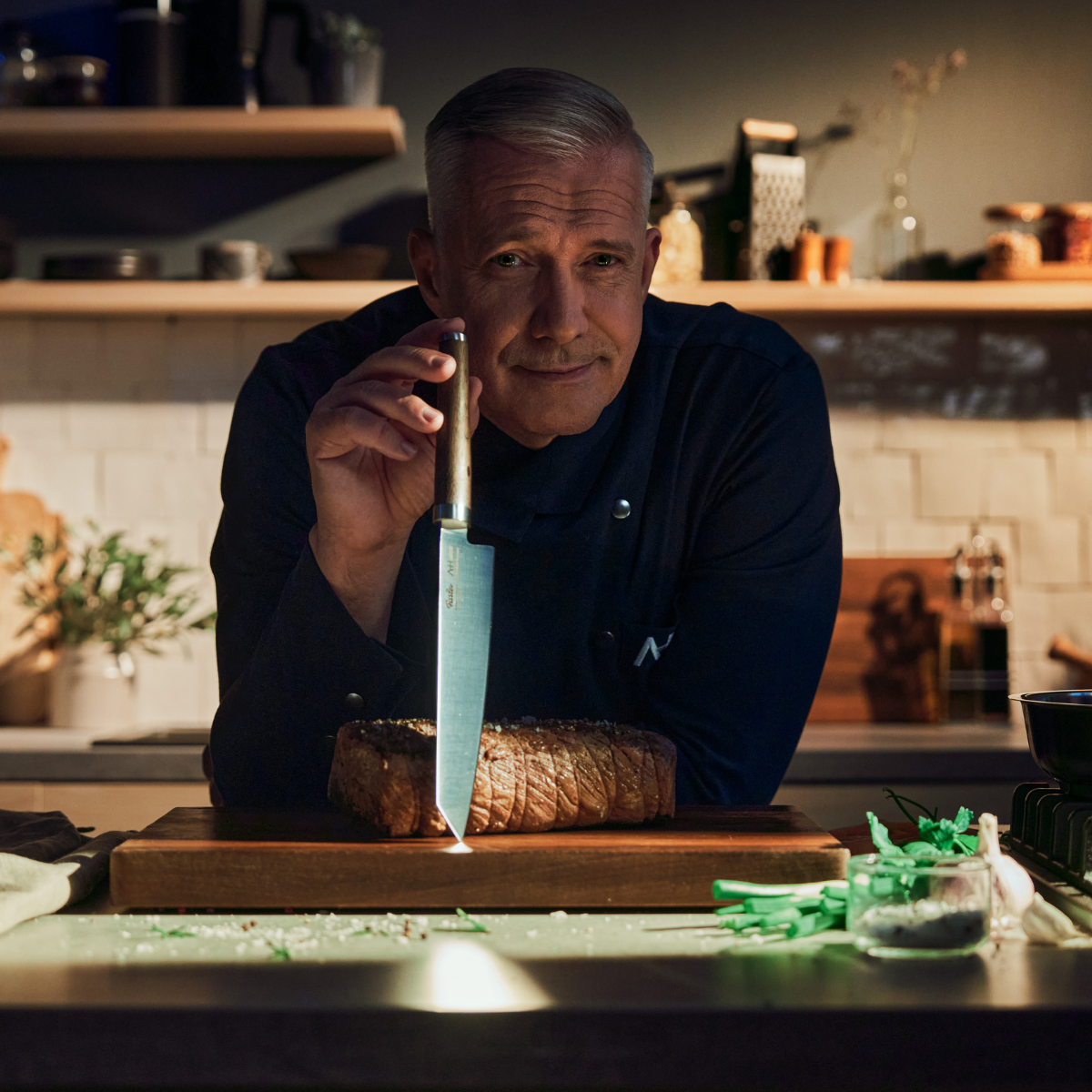
A perfect saddle of venison allows no second try. The very first cut shows whether the temperature and timing were right. A delicate crust on the outside. A juicy, evenly pink center on the inside. This precise balance is exactly what makes saddle of venison one of the most sought-after cuts of game. 

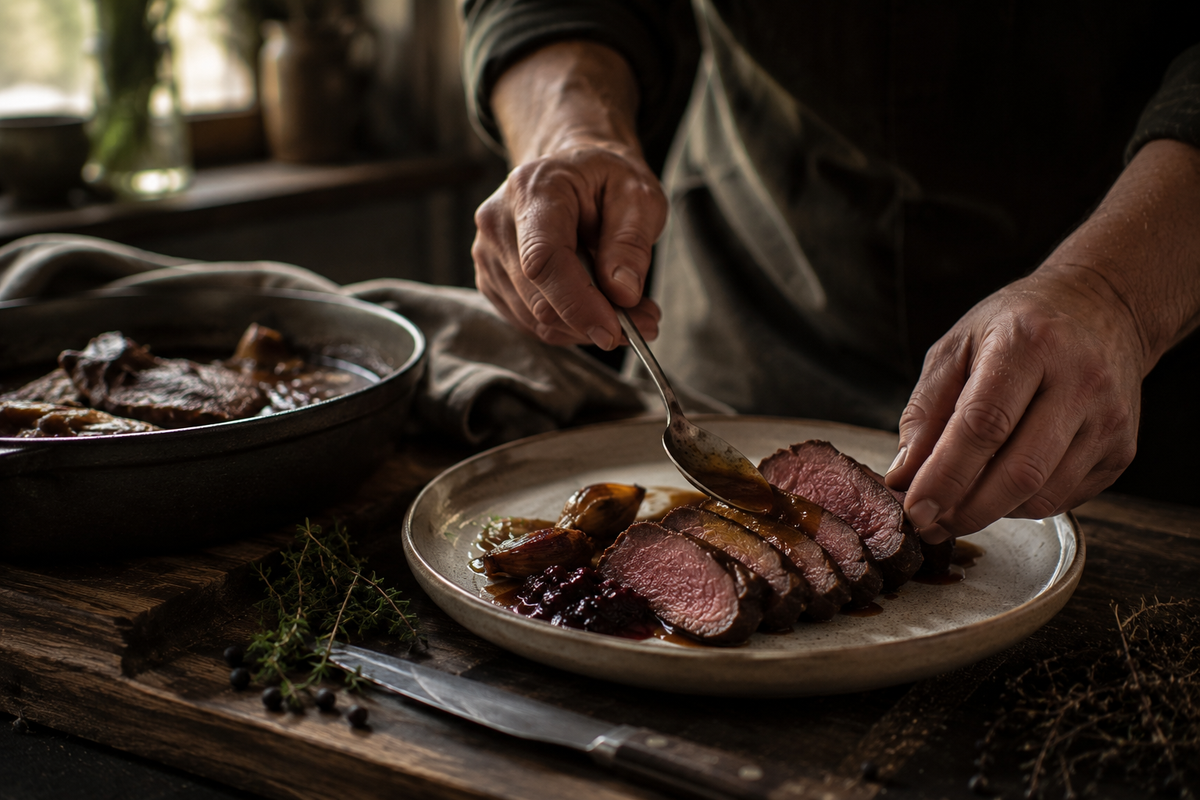
Its delicate flavor needs no loud accompaniments. Bold spices or heavy sauces would hide more than they enhance. Good ingredients complement saddle of venison - they never outshine it.

On the bone or boned out?

Both options have their appeal. Cooked on the bone, the heat is distributed especially evenly. At the same time, the bone protects the meat from rising in temperature too quickly and contributes to a particularly harmonious aroma. Many game chefs value precisely this original way of preparing it. 

Boned-out, on the other hand, venison saddle offers maximum precision. It is easier to portion and can be cooked to perfection with pinpoint accuracy – ideal for individual medallions or delicate venison fillet. It is not the method that determines the quality, but the conscious way you handle it.

Gentle heat brings out the best

More heat doesn’t make it better. The right heat does. That’s why reverse searing is one of the best methods for high-quality venison loin. First, the meat cooks slowly in the oven before developing its roasted aromas in a hot pan for a few seconds. This preserves the delicate texture, and the crust forms exactly where it should – on the surface. 

Sous vide is also ideal. The precise water bath brings the venison loin to exactly the desired doneness and creates the perfect conditions for a flawless finish. 

Seconds make the difference. That’s exactly where true craftsmanship shows.

Ree loin - the essence of venison``

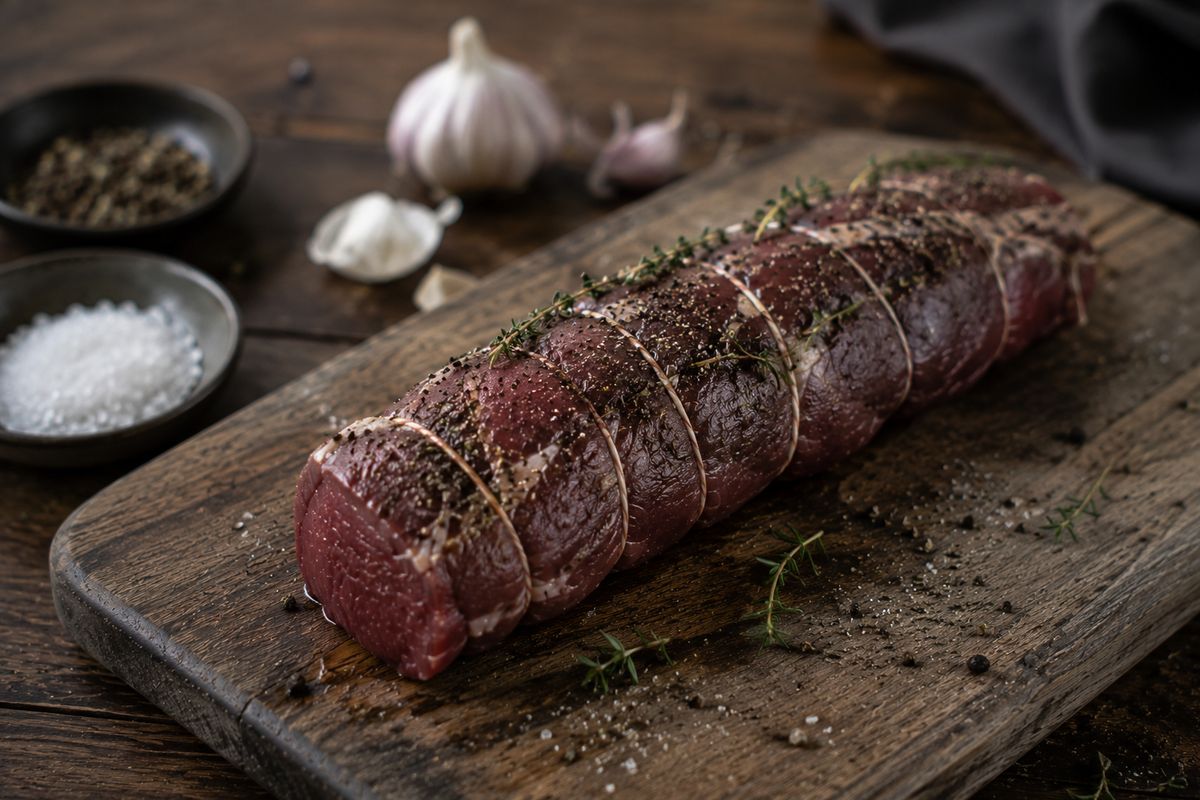
Venison fillet is the most tender muscle of the animal and at the same time one of the finest cuts in game cuisine. Less really is more here. Butter. Fresh thyme. Perhaps a hint of garlic. A good venison fillet usually needs no more than that. 

An exceptional product does not need to be staged. It simply needs the space to show its own character. If you want to prepare venison fillet, a deliberately restrained approach often pays off. Quality needs no staging.

Venison Haunch - one cut, many possibilities

The venison leg showcases the full variety of roe deer. While the saddle stands for refined elegance, the venison leg opens up an impressive range of preparation options. Its different muscle groups create dishes with a character all their own – from tender medallions to slow-braised classics. 

This versatility is exactly what makes it especially exciting for many chefs. Hardly any other cut demonstrates so impressively how differently one and the same ingredient can be interpreted.

Upper shell

Fine and lean

Venison medallions, quick-fry cuts

Nuts

Even Texture

Cooked pink or as a roast

Lower shell

Robust, more connective tissue

Braising

Reef meat: Light, nutrient-rich, and full of character

In addition to its delicate flavour, venison also stands out nutritionally. The nutritional values of venison make it one of the leanest types of meat of all. It provides high-quality protein, iron and B vitamins while remaining low in fat. But numbers describe only part of its quality. 

Venison always tells a story of where it comes from. Of forests and clearings. Of herbs, buds and the changing seasons. Of an animal that moves freely and whose habitat shapes every single fibre. It is precisely this authenticity that gives the meat its unmistakable purity and makes every cut something special.

Tips & Tricks

More cooking tips

Become a master at your stove and discover the versatility of uncoated stainless steel. We share our best kitchen secrets, product expertise, and inspiration for true cooking craftsmanship with you.