


Filleting oranges
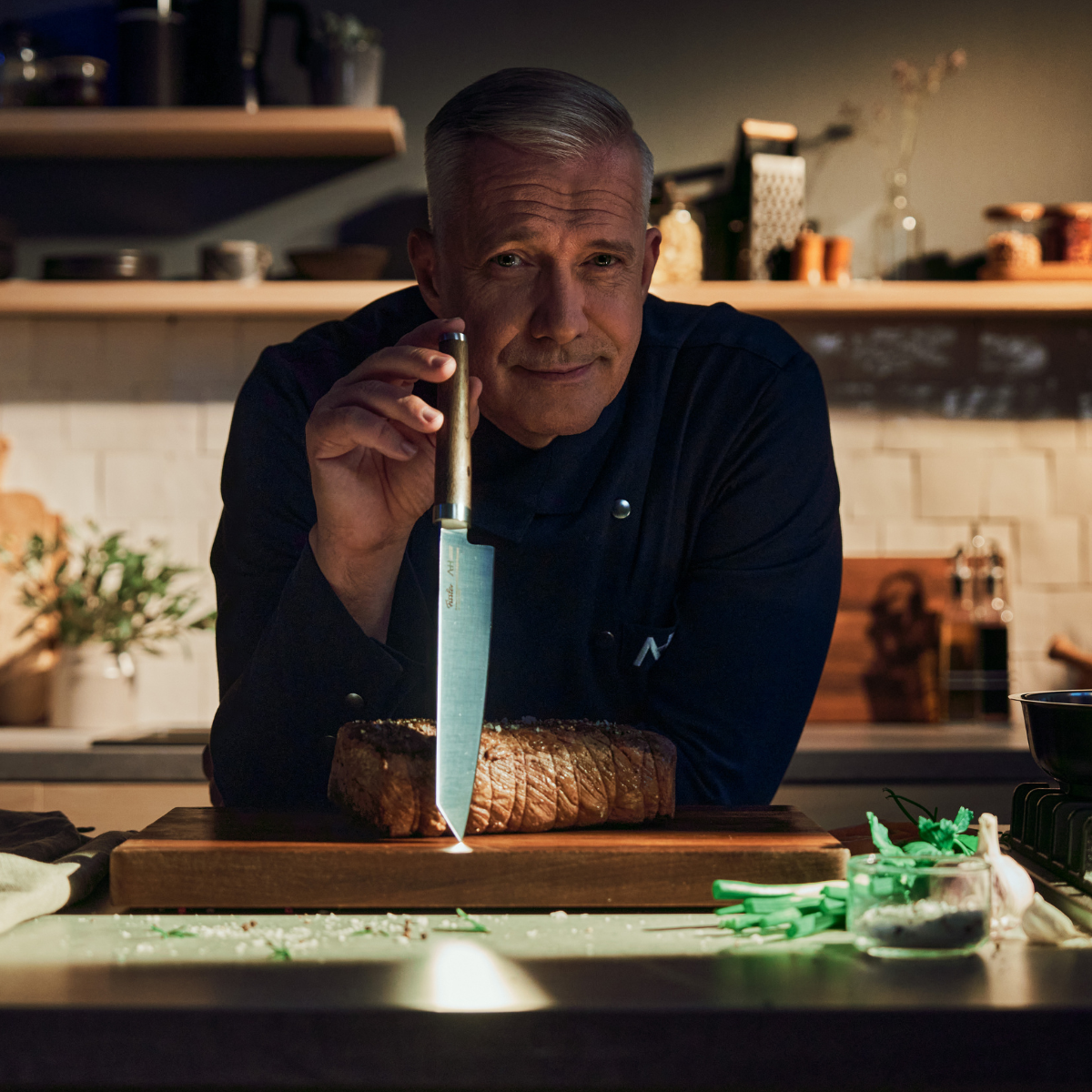
For creating fine orange segments, a filleting knife is best suited – as the name suggests. Its flexible blade adapts to the curve of the orange and allows for precise segmenting, ensuring that as little pulp as possible is wasted.
Shop settings
Select country
Select language
(1) Delivery takes place within the delivery period specified for the respective product.
(2) Deliveries are made exclusively to addresses within the Federal Republic of Germany, Austria, Belgium, Italy and the Netherlands.
(3) If the ordered product is unavailable because our supplier fails to deliver it on time or delivers the wrong product, despite our having concluded a supply contract with the supplier for the ordered product, and Fissler is not responsible for this, Fissler reserves the right not to deliver. In this case, Fissler will inform the customer of the unavailability of the ordered product without delay and promptly refund any payments already received from the customer.
(4) If delivery is impossible due to force majeure, Fissler is released from its obligation to deliver. Circumstances that make delivery unreasonably difficult or impossible are considered equivalent to force majeure, whether they arise on our side or on the customer's side.
(6) Delivery costs are listed separately for each delivery. The applicable shipping costs are listed in our online shop and will also be displayed during checkout before you submit your order.
Shipping to Germany, Austria, the Netherlands and Italy is free for orders worth €80.00 per delivery or more. For orders under €80.00, shipping costs are €4.95 for deliveries to Germany and €6.95 for deliveries to Austria, the Netherlands or Italy.
For deliveries to Belgium, shipping costs are €12.95 with DHL. For shipments with GLS, shipping costs are €6.95 for orders up to €79.99; shipping with GLS is free for orders worth €80.00 or more.
(7) By recycling used packaging correctly, you help conserve natural resources and prevent environmental pollution.
We are therefore happy to take back packaging waste generated upon delivery free of charge, so that it can then be properly recycled.
You can also dispose of packaging waste, such as shipping boxes and packing materials, free of charge through your local waste disposal system (recycling center, yellow bag, yellow bin or paper bin).


For creating fine orange segments, a filleting knife is best suited – as the name suggests. Its flexible blade adapts to the curve of the orange and allows for precise segmenting, ensuring that as little pulp as possible is wasted.

1. Peel
First, cut off the Lid and the bottom of the orange just enough so that the flesh is visible. Then stand the orange on one of the cut sides and peel off the remaining skin all around in strips. It is important to remove all of the white pith as well.

2. Remove the fillet
Now carefully remove the individual fillets along the white membranes.

3. Collect the juice
A small bowl catches the orange juice.


Shop settings
Select country
Select language
Welcome to Fissler
We found a market that suits you.
There you will find the products, prices and information that match your location.
OTHER MARKETS